
Dietitian's point: Milking plants
Author: Munire Didem Varol, registered dietitian
Disclaimer: The opinions expressed in the following article are those of the author(s), and do not necessarily reflect those of Foodoc.
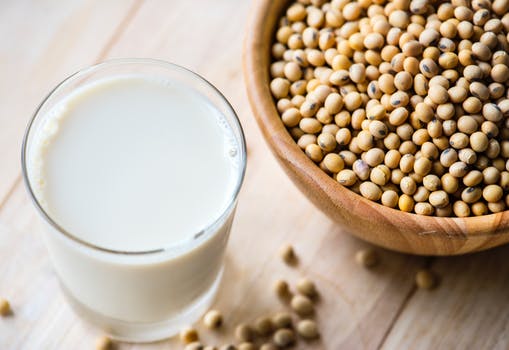
Can you really milk plants? In a way, yes…today (August 22nd) is World Plant Milk day…a day to celebrate the wide variety of delicious and nutritious plant-based beverages that are now widely available such as soy, almond, coconut, oat, hemp and more. For now, let’s refer to them as “beverages” instead of “milks” because according to Canadian Food and Drug Regulations the definition of milk is restricted to milk from animals.
World Plant Milk Day is a campaign that encourages people to try plant-based alternatives to milk because of the known benefits for human health, the environment and for animal welfare.
Benefits for Human Health
Cow’s milk has been brilliantly marketed – how many of us have seen the ads with celebrities and their milk moustaches? The reality is that we don’t actually need the milk from any animal, beyond the necessity of human breast milk. This is made obvious in the fact that most people in the world are lactose intolerant, meaning they cannot properly digest milk. You could call it nature’s way of weaning1.
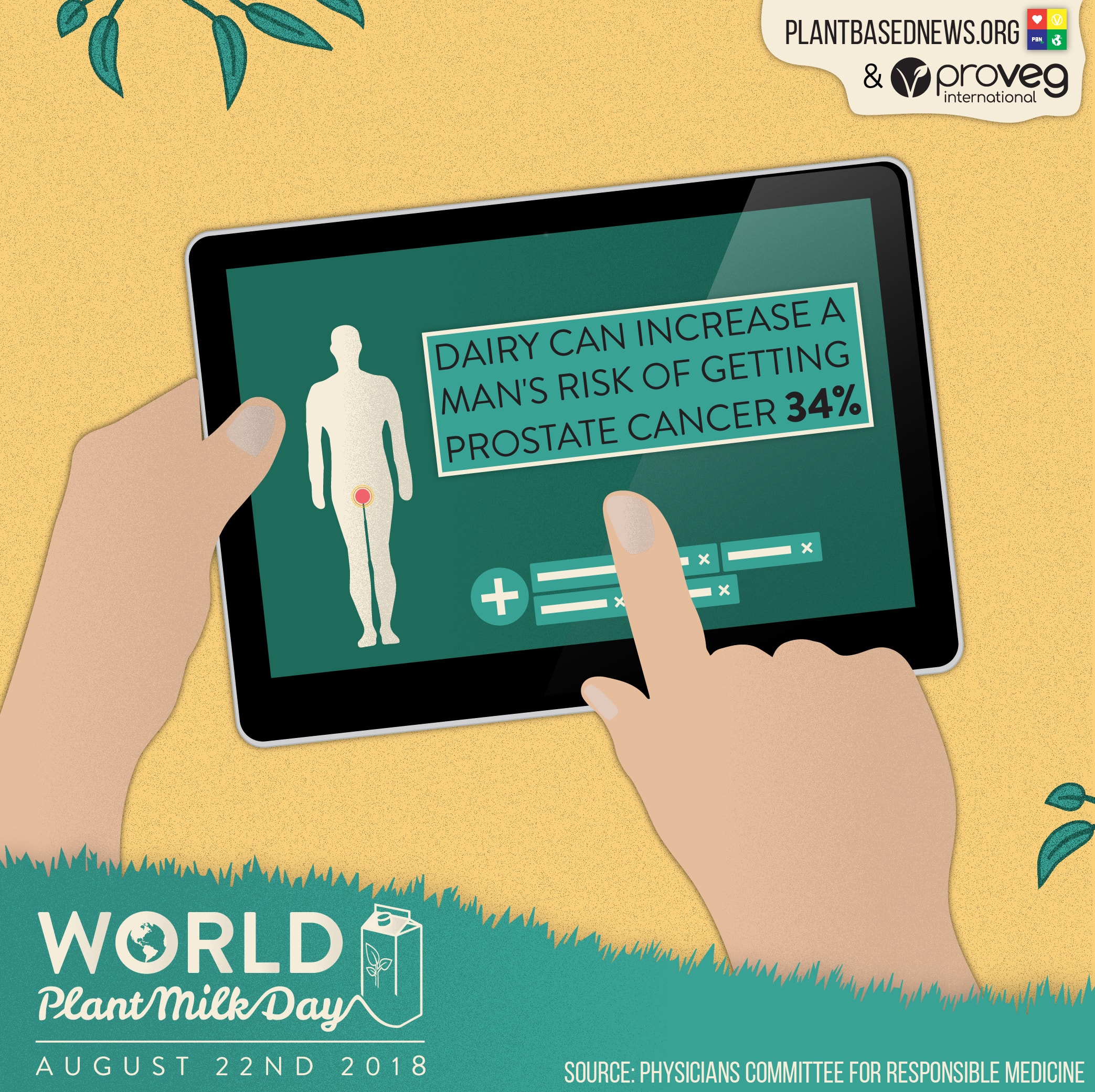
Furthermore, there is overwhelming scientific evidence associating dairy consumption with many diseases, such as cancer, which happens to be the leading cause of death in Canada2. The Canadian Cancer Society actually lists a “diet high in fat and dairy products” as a risk factor for prostate cancer. Why? A simple answer is that milk is naturally hormonally active (regardless of whether additional growth hormones have been used, which are not permitted in Canada but are in the US). Milk is naturally designed to help a baby calf grow fast. The two active proteins in cow’s milk, whey and casein, increase the production of two growth promoting hormones, insulin and insulin-like growth factor-1, both of which have been identified as regulators of cancer-growth pathways1. Yes, it is possible (and can be healthier) to build strong bones and obtain nourishment from plant-based beverages.
Other health problems with dairy in general include saturated fat, natural trans fats and cholesterol, all of which are known to increase blood cholesterol levels, which in turn increase heart disease risk, the second leading cause of death in Canada2.
Environmental and Animal Welfare Benefits
Dairy production has huge impacts on the environment, from climate change to water and land use. If we just consider climate change, here’s the problem: cows emit methane gas and nitrous oxide is released via their manure. Both of these gases have much greater greenhouse gas warming potential (25 times and 300 times more, respectively) than carbon dioxide.
Lastly, the days of the small family farm have largely been replaced with industrial dairy farms that favor one thing: production. Growing up, I had no idea that there was anything odd about milking cows – I thought that’s what they were meant to do for us (in addition to eating their meat). It never occurred to me that a “dairy” cow was just like any other mammal – she delivers her baby and the milk she produces is intended for that baby! Instead, that baby is whisked away and the mom is repeatedly milked, impregnated and so on until she “expires”.
How to choose a plant-based beverage
Hence World Plant Milk Day!
There are alternatives to dairy and here are some tips on how to choose them:
If you’re looking for protein ->
- According to the Canada’s Food Guide (which is currently under revision) only fortified soy beverage is recommended as an alternative to cow’s milk because of its comparable protein content (average of 7 vs. 8 g per cup). However, protein is a nutrient that’s not really a concern for most healthy adults…in other words, we don’t really need to worry about protein unless we’re talking about kids, seniors or people with special conditions. (We should be more worried about the lack of fibre in our diet but that’s another article all together!).
Make sure it’s “fortified” ->
- Ensure the package says “fortified” which means that vitamins have been added to the beverage to make it nutritionally equivalent to cow’s milk, especially Vitamin D (by the way, cow’s milk is also fortified with Vitamin D, it is not naturally present). You could make your own plant-based beverages, but these will not be fortified (unless you add some vitamins yourself). All of this is doable but please be careful and/or speak to a Registered Dietitian.
Avoid added sugars ->
- Either look for “unsweetened” on the front of the package and/or look at the ingredients list to ensure no sugars have been added. Many flavoured varieties are sweetened.
Experiment ->
- Each plant-based beverage has a unique taste; you might need to experiment with a few before you find one you really like.
Are there any disadvantages with plant-based beverages?
Yes, as with anything there could be some disadvantages…
Children
Infants and children have unique nutrition demands. Plant-based beverages, regardless of whether they are fortified, are not appropriate for children in their first two years of life. Between the ages of 2-8, only fortified soy beverage is an acceptable alternative (and no, boys will not develop man-boobs from soy beverage…this is a myth). For specific information on infant and child feeding, it’s best to speak to a Registered Dietitian who can assess overall diet quality, nutrient needs and how to meet those needs. Remember the big picture: all children would benefit if they would “chew” more of their nourishment rather than “drink” it in the form of milk, plant-based beverages or juice.
Whole foods
The best available science to date could be summed up in one simple piece of advice: “the more whole plant foods we eat, the better”. That means minimizing (or eliminating) meat and dairy foods and focussing on whole plants foods: foods of plant origin in a form as close as possible to that which they are found in nature.
Whole soybeans, nuts and grains are very different from their beverage counterparts which have been processed and often have a long list of added ingredients. But as if with anything in life it’s all about a continuum of risk. I wouldn’t recommend my clients to drink cups and cups of plant-beverages, not because they don’t match up to dairy (quite the contrary) but simply because they are not in their “whole” plant form. Using fortified, plant-based beverages in moderation such as for breakfast cereals, baking and cooking is fine.
Bottom line
It’s never been easier to try plant-based alternatives to dairy. The potential benefits for yourself, the environment and for animal welfare are immense. For more information, speak to a Registered Dietitian – we’re trained to help you decipher fact from fiction!
[1] Hever, J, & Cronise, R.J. (2018) Idiot’s Guide to Plant-Based Nutrition 2nd Edition. Indianapolis, Indiana: DK Publishing. p. 92
[2] Data from 2013. Retrieved September 28, 2017, as per Statistics Canada:http://www.statcan.gc.ca/pub/82-625-x/2017001/article/14776-eng.htm